

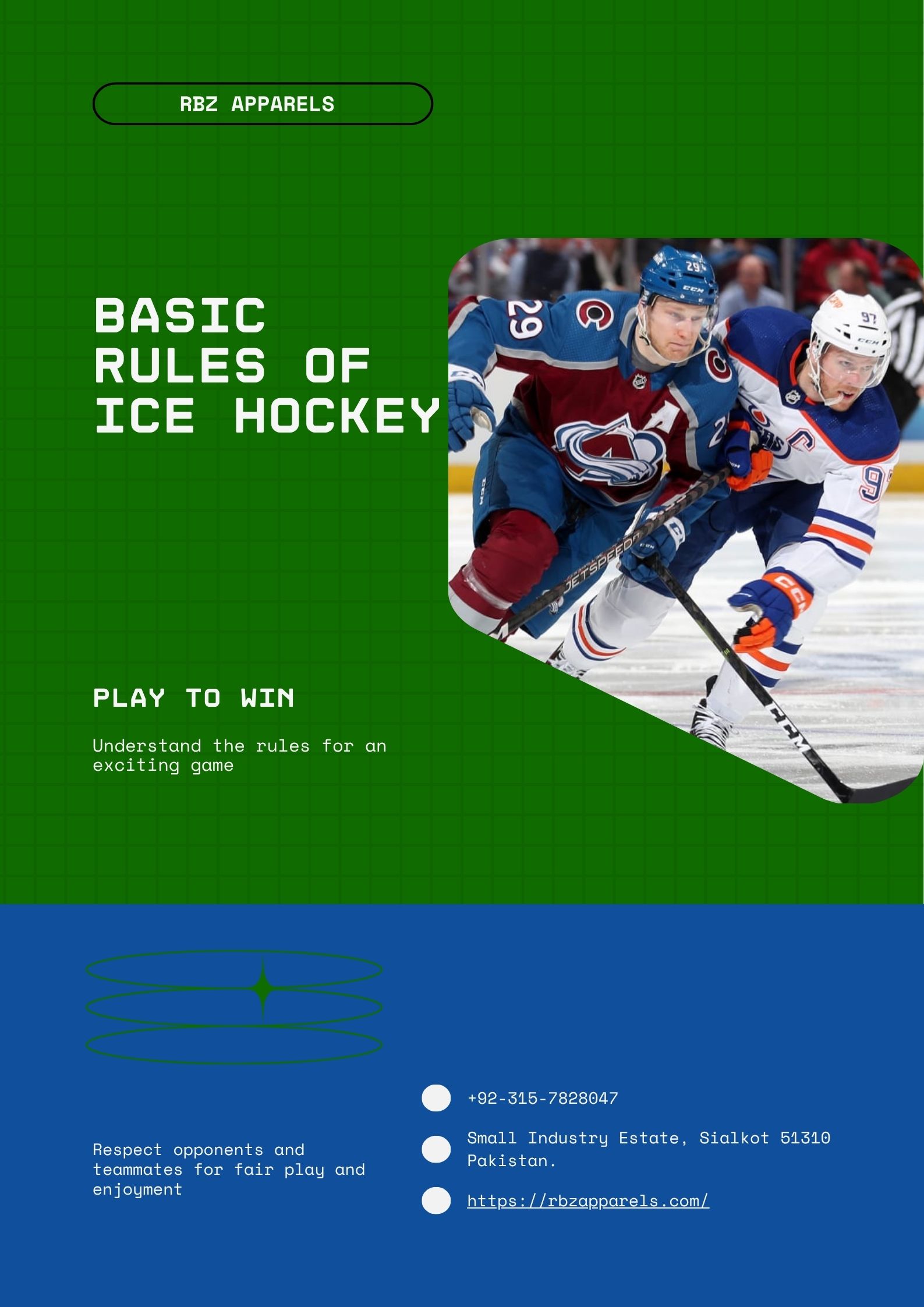
Ice hockey is one of the fastest and most exciting sports globally. If you are new to ice hockey, it may seem very chaotic when players fly up and down the ice with quick movements, line changes, and various signals from referees. However, the more you play or watch hockey, the simpler it becomes as you begin learning the basic ice hockey rules. In this article, we will outline the basic rules of ice hockey, and hopefully, you will be able to enjoy the game like a seasoned player, coach, or fan.
1. Closing the Hand on the Puck
In hockey, the only player that can catch and hold onto the puck is the goaltender. If a player catches the puck while the goaltender is not in possession of it, that player must immediately drop the puck back onto the ice and cannot continue to hold it. If the player holds onto or throws the puck in any way, the player will receive a two-minute minor penalty for “closing the hand on the puck.”
2. Faceoffs
A faceoff is a method used to begin or return to play. This is the procedure:
- Players assemble at one of the five faceoff circles on the ice.
- Only two players (one from each team) can be in the circle for the drop.
- The location of the faceoff depends on why the last stoppage in play happened.
Faceoffs are important because they let you get possession back and potentially set up a play.
3. Delay of Game
Several actions or violations can result in a two-minute minor penalty for delay of game, including
- shooting or batting the puck out of play deliberately
- When a player purposefully knocks the goal net out of position
- When a team does not send the right number of players (as warned) onto the ice
- When a player is substituted with another player illegally
These infractions are meant to keep the game running correctly.
4. High-Sticking
- If a player strikes the puck with their stick above shoulder level, play is stopped.
- If a goal is scored with a high stick (above the crossbar), it is disallowed.
- In addition, if a high stick is called on another player, it is either a minor or major penalty, depending on the severity.
5. Icing the Puck
It occurs when a player shoots the puck from behind the center red line and it crosses the opposing team’s goal line without being touched.
- When icing happens, play is stopped, and a face-off will consistently take place along the face-off dot in the offending team’s zone.
- Icing is not called if:
- The goalie plays the puck.
- The other team is to have played the puck before crossing the line.
- If it was a clear attempt to clear the zone.
- it was a clear attempt to clear the zone.
Icing is meant to deter teams from inducing delays using long-distance clearing.
6. Offsides
A team is offside if a player crosses into the offensive zone (over the blue line) before the puck.
- To be offside, both skates must be completely over the blue line.
- If a player has one skate on or behind the line, it’s still considered onside.
This is to ensure that both teams are playing fairly in order to control the puck while attacking.
7. Overtime Rules
If a regular season game is tied after three periods,
- A 5-minute sudden death overtime (3-on-3 skaters) will occur.
- If a tie still exists, the game will continue to a shootout.
If the game is tied in the playoffs:
- No shootout.
- 20-minute sudden death overtime periods until either team scores.
8. Penalties Explained
There are three types of penalties:
Minor Penalty (2 minutes)
- Minor given for actions such as tripping, slashing, hooking, or interference.
- The penalized player serves time in the penalty box, and the team is short-handed.
Major Penalty (5 minutes)
- Major taken for more serious actions such as fighting or boarding.
- If the opposing team scores on a major, the penalized player’s penalty remains… (e.g., they will be in the penalty box for 5 minutes).
Misconduct Penalty (10 minutes or game)
- Misconduct: taken for actions that are disrespectful or dangerous.
- The player will serve 10 minutes of time while the team is not short-handed, unless there is a minor penalty called simultaneously with the misconduct penalty.
9. Penalty Shots.
A penalty shot is called in the following instances:
- A player is fouled on a breakaway scoring chance.
- A goalie or defender intentionally knocks the goal net off its moorings.
The player goes one-on-one with the goalie, carrying the puck without interference from any defender.
10. Power Plays
A power play occurs when one team has more players on the ice because the other team is serving a penalty.
- During this time, the power-play team applies pressure to get a goal.
- If the power-play team scores while the other player is serving a MINOR penalty, the player is exercised to return to the ice and becomes part of the game.
11. Shootouts
If the game remains tied after overtime in regular season play, a shootout ensues:
- Each team will take a 3-shot attempt.
- If after 3 shots there is still a tie in scoring, the shootout continues in a sudden-death format.
- The team with the most goals after the shootout wins and is also awarded 1 additional goal.
Top Ice Hockey Jerseys & Where to Buy Authentic Gear Online
Discover high-quality youth ice hockey jerseys that prioritize both performance and style. Visit RBZ Apparels to shop for authentic gear – your reliable brand for hockey apparel.
Final Thoughts
Ice hockey isn’t just fast skating and big hits—it’s a game, complete with rules, strategies, and skills. Now that you know some of the basic rules of ice hockey, you can enjoy watching (and playing) a whole lot more. Offsides, icing, power plays—these rules help make the game fair, competitive, and fun.